



Topic: Electrical Systems
1st Attempt: 0 / 20
Final Score: 0 / 20
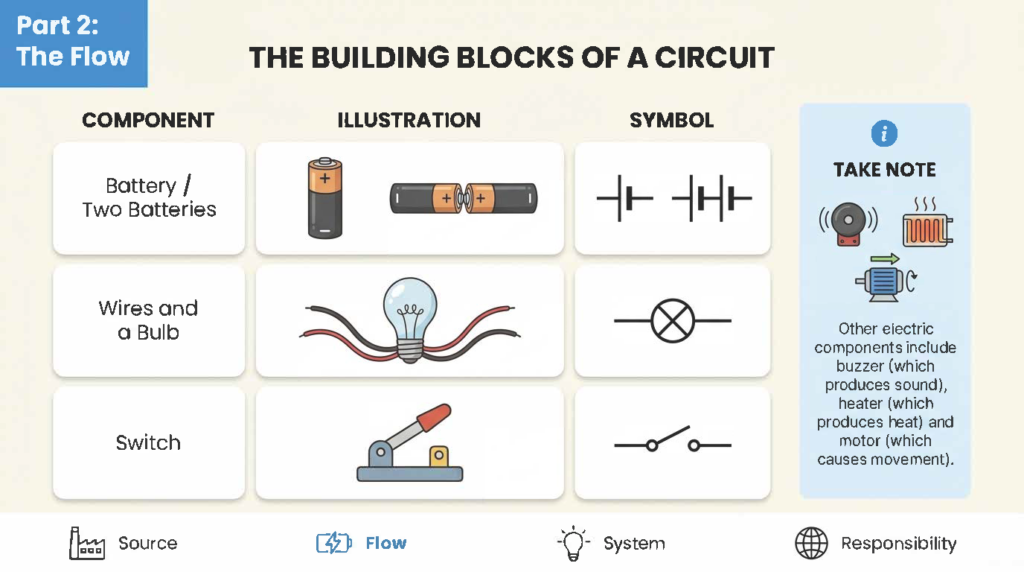
1. Which part of the circuit provides the energy needed to move electrical charges?
2. What is the function of a switch in an electrical circuit?
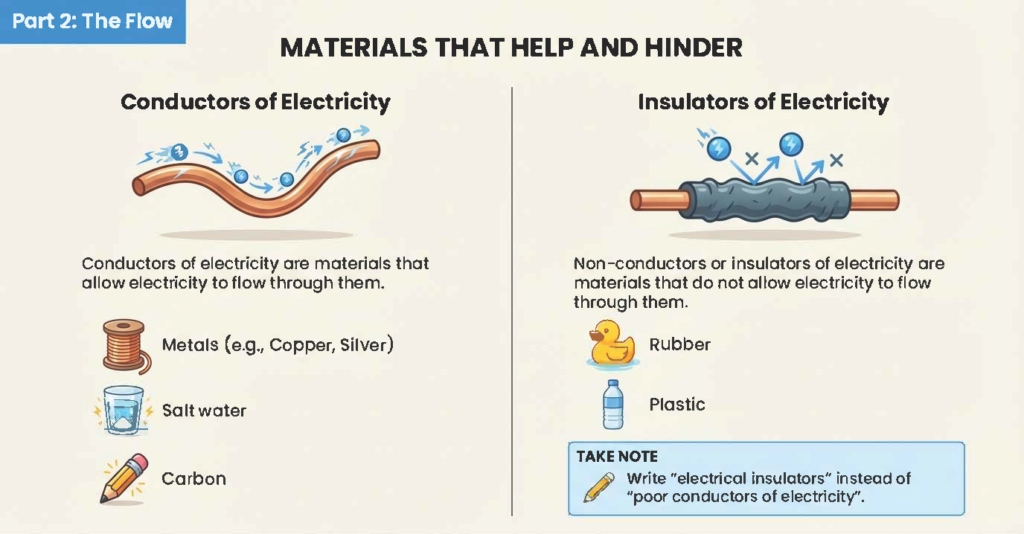
3. Which of the following is an electrical conductor?
4. A circuit where there is a gap or a break is called ________.
5. To light up a bulb, the wires must be connected to its ________.
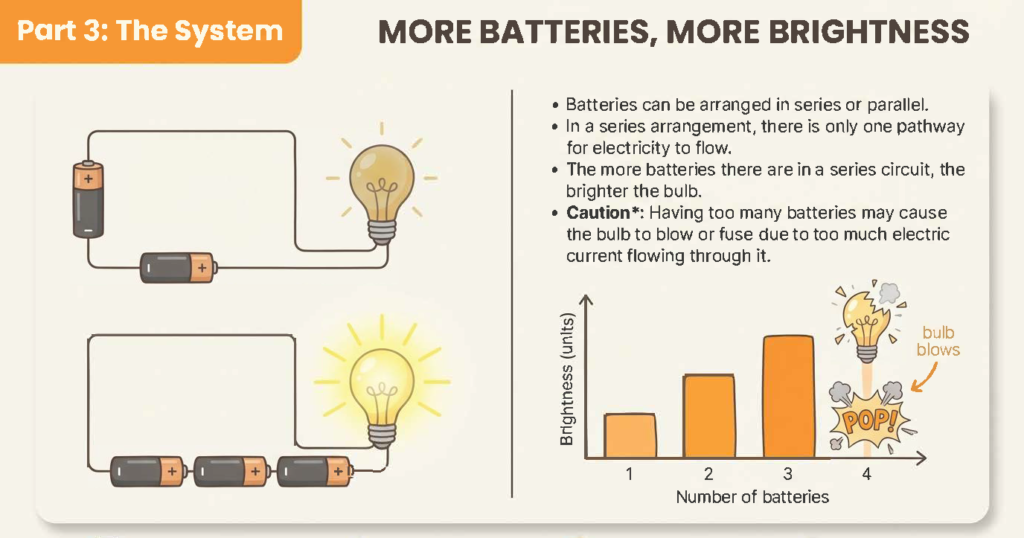
6. Adding more batteries in series will cause the bulb to ________.
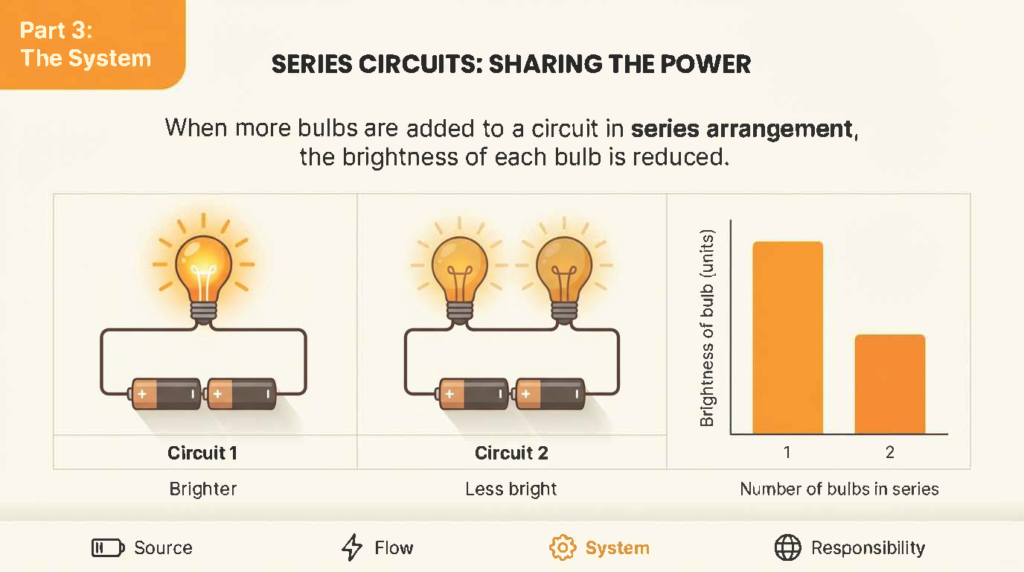
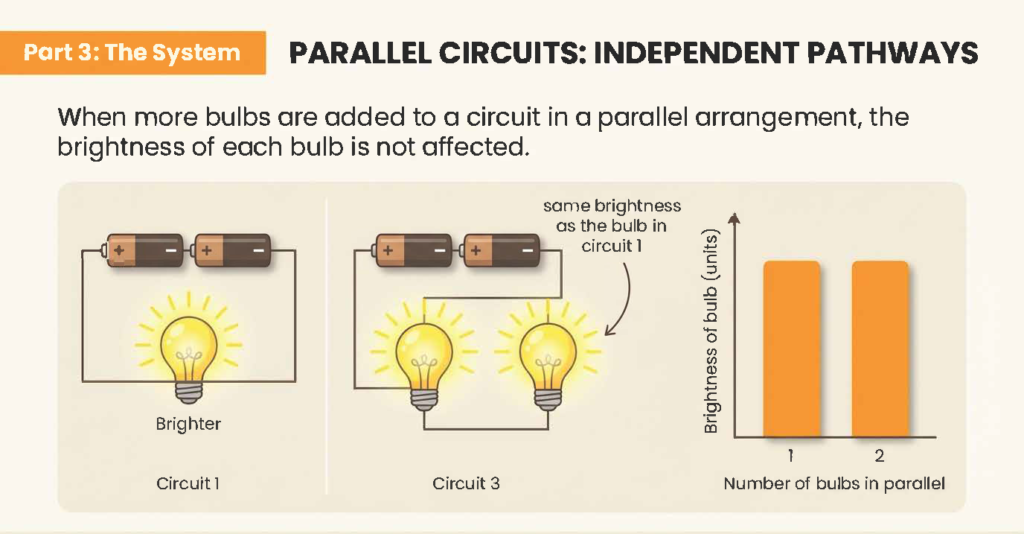
7. When bulbs are arranged in series, if one bulb fuses, the others will ________.
8. Bulbs in a parallel arrangement are usually ________ than bulbs in series.
9. Which of the following is an electrical insulator?
10. Why is the wire of an appliance covered with plastic?
11. In a series circuit with 3 bulbs, if you add a 4th bulb…
12. Batteries in a parallel arrangement ________ than those in series.
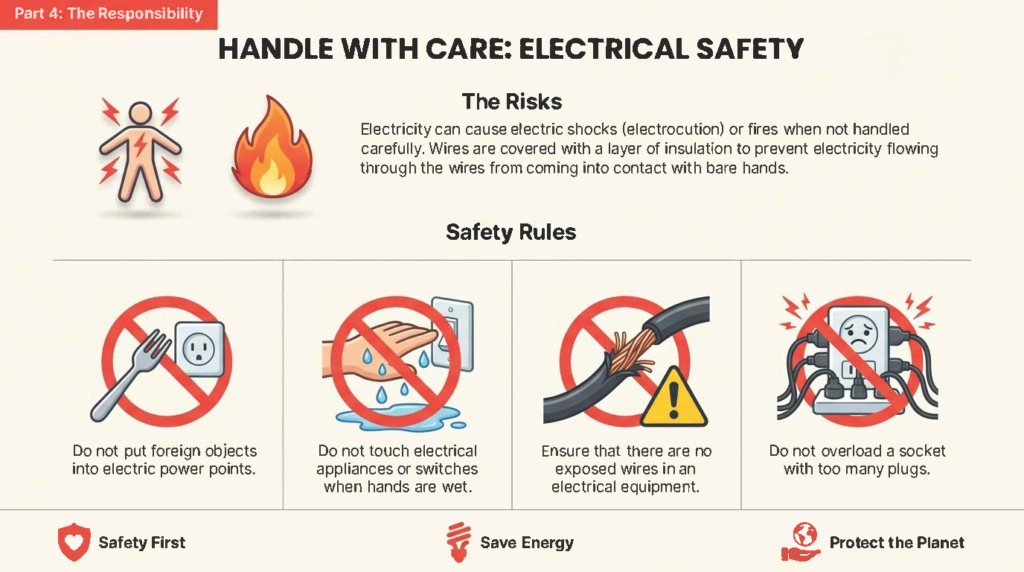
13. Which safety rule is correct for electricity?
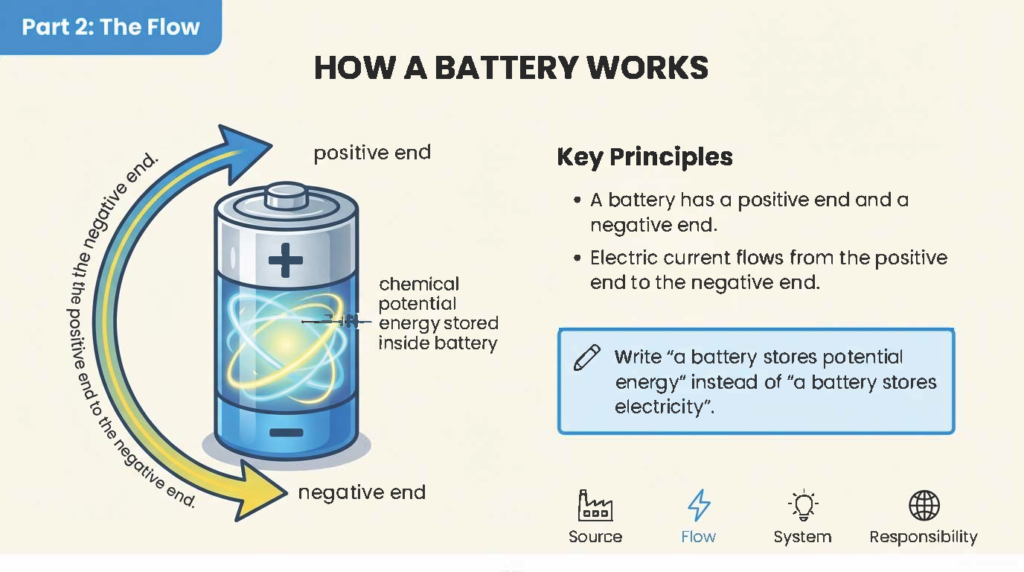
14. What happens if a battery is connected with its positive (+) terminal facing another positive terminal?
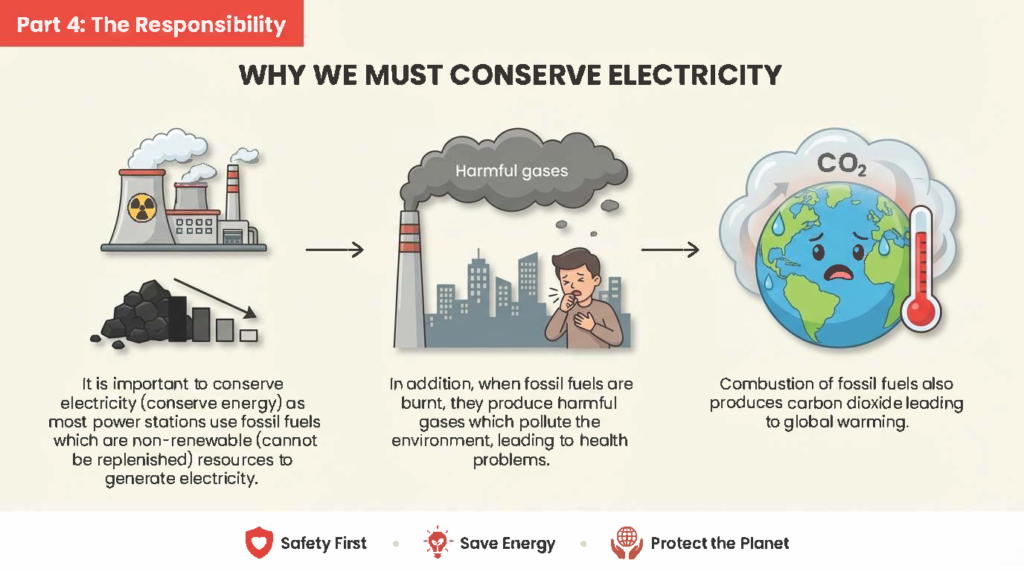
15. Why do we need to conserve electricity?
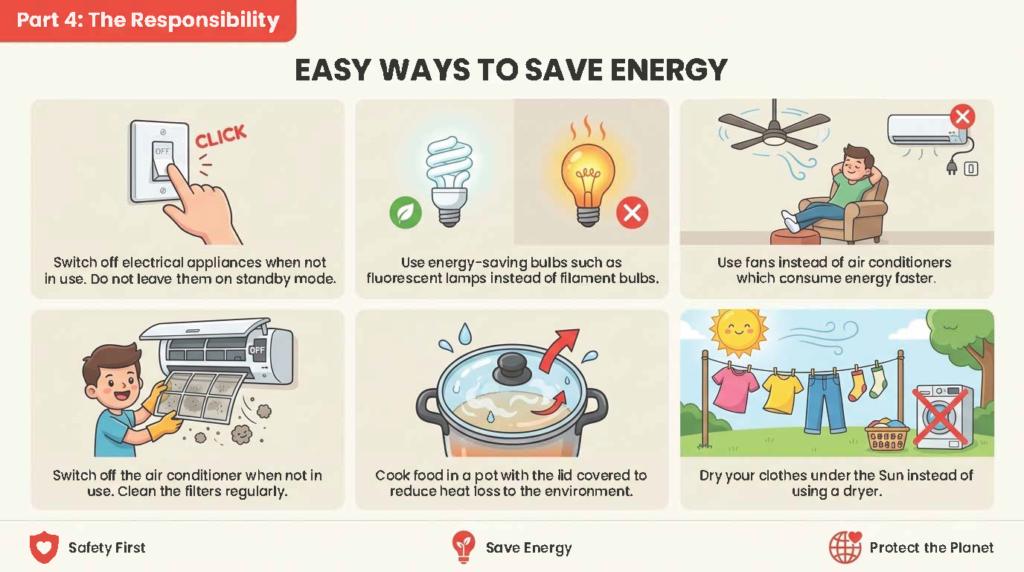
16. Which of the following uses the LEAST electricity?
17. An electric current is the ________.
18. To make a bulb light up, the circuit must be ________.
19. Which of these can act as a circuit tester?
20. Which material is most commonly used for electrical wires?
1st Attempt: 0 / 20
Final Score: 0 / 20
Section 2: Conductors vs Insulators
Sort the materials into the correct group based on their electrical properties:
Steel Paperclip
Plastic Spoon
Gold Ring
Glass Bottle
Pencil Lead (Graphite)
Rubber Band
Conductors
Insulators
Section 3: The Secret to a Glowing Bulb
Complete the explanation of how a bulb lights up:
Closed
Current
Energy
Filament
Terminals
For a bulb to light up, it must be part of a circuit.
The electrical must flow from the battery.
The wires must be connected to both of the battery.
As the charges pass through the bulb, they heat up the until it glows.
This process converts electrical into light and heat.