
Matter and Its 3 States
1. Properties of Matter
Matter is anything that has mass and occupies space.
Mass
The amount of substance an object has.
Tool: Beam Balance
Units: grams (g) or kilograms (kg)
Volume
The amount of space an object takes up.
Tool: Measuring Cylinder
Units: ml or cm³
2. Comparing the States
| Property | Solid | Liquid | Gas |
|---|---|---|---|
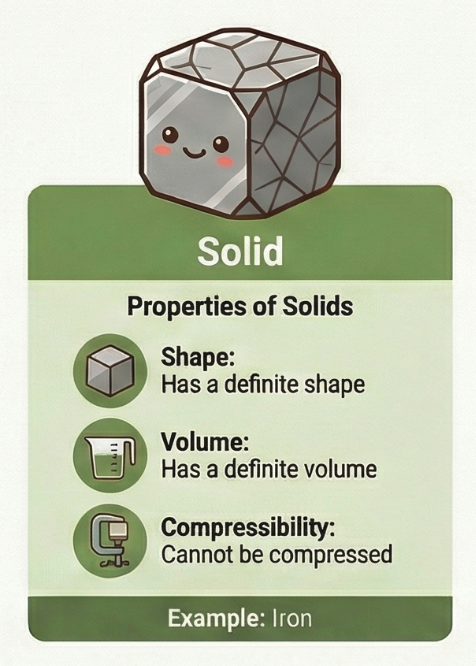
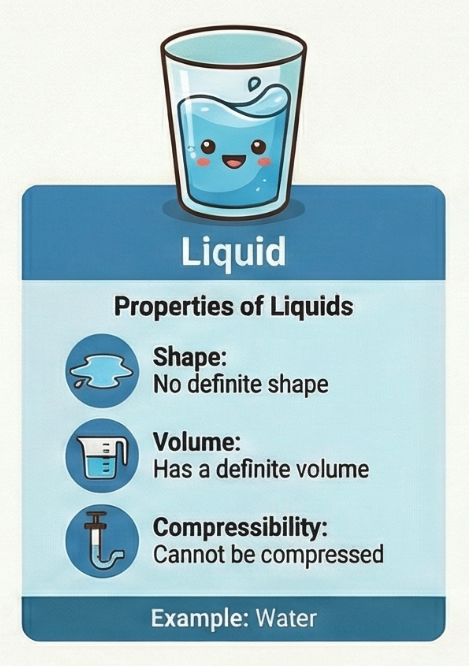
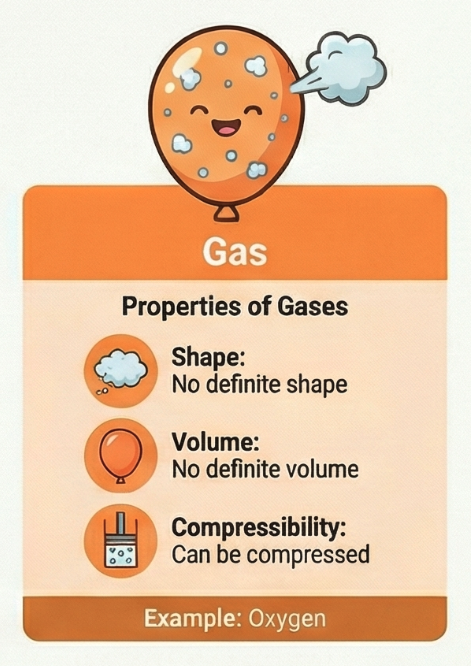
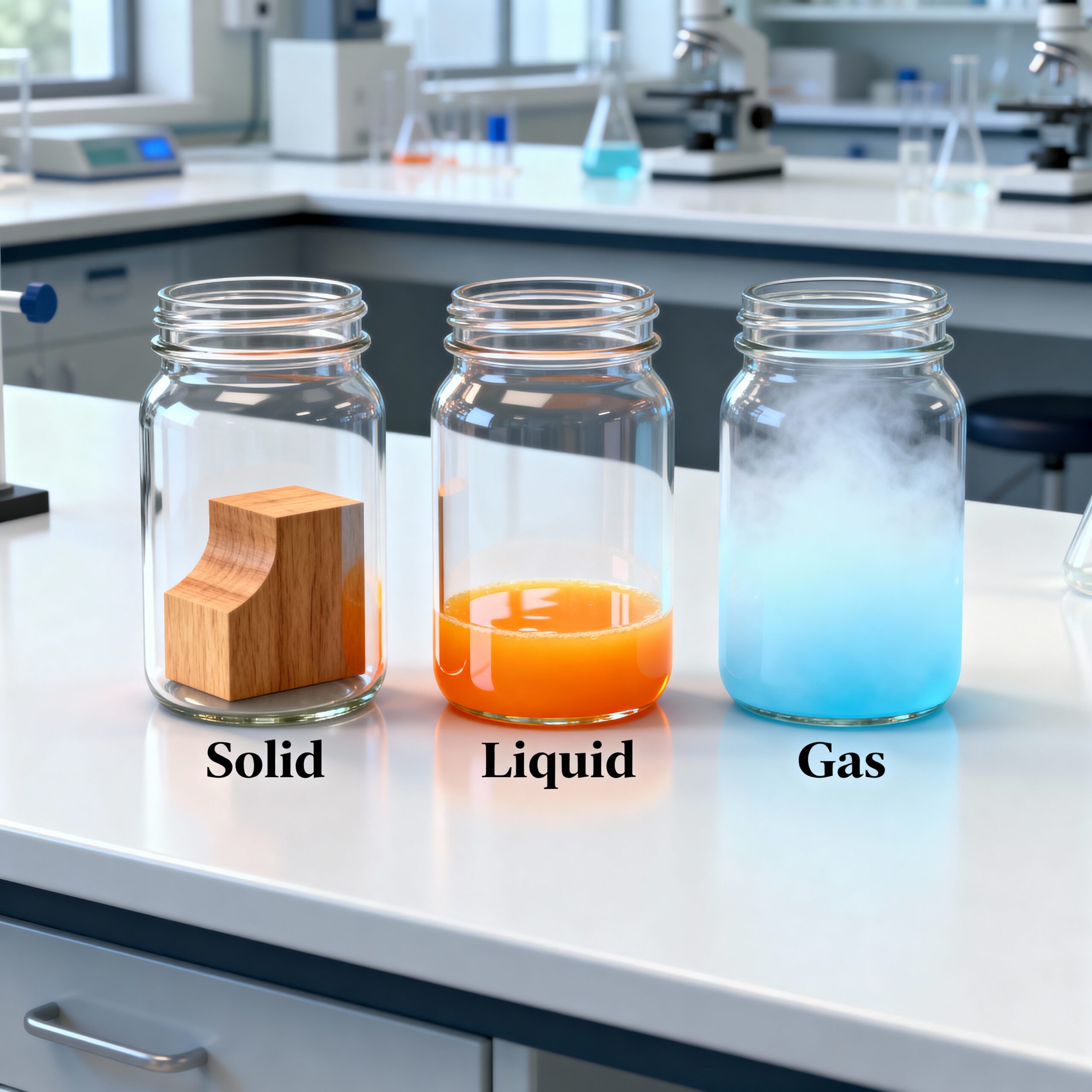
| Volume | Definite | Definite | No Definite |
| Shape | Definite | No Definite | No Definite |
| Compression | Cannot | Cannot | Can |
3. Measuring Volume
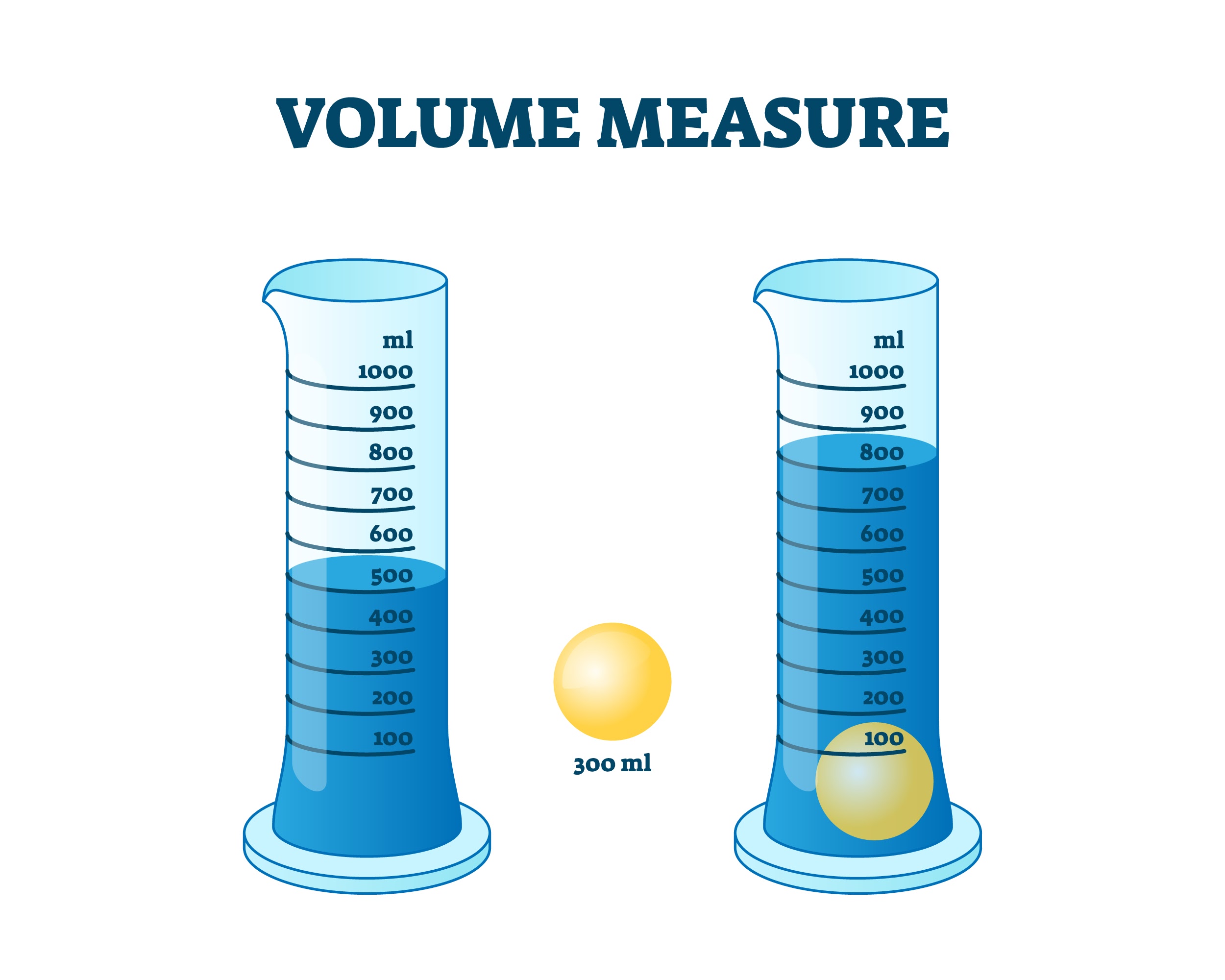
Irregular solids (like stones) are measured using the displacement method.
4. Changes of State
- Melting (Solid to Liquid)
- Boiling & Evaporation (Liquid to Gas)
- Freezing (Liquid to Solid)
- Condensation (Gas to Liquid)

Your Total Score: 0 / 20
Keep practicing to master PSLE Science!
Identify the state of the following:
Task: Sort the States of Matter
Drag items into the correct categories (Assume room temperature where applicable).
Comprehensive Revision Cards
Matter
Tap to flipAnything that has mass and occupies space (volume). Examples: Air, water, rocks.
Properties of Solids
Tap to flipHas a definite shape and a definite volume. Cannot be compressed.
Properties of Liquids
Tap to flipHas a definite volume but no definite shape (takes the shape of container). Cannot be compressed.
Properties of Gases
Tap to flipHas no definite shape and no definite volume. Can be compressed.
Boiling vs Evaporation
Tap to flipBoiling: Fast, happens at 100°C throughout liquid.
Evaporation: Slow, happens at any temperature at the surface.
Condensation
Tap to flipProcess where a gas loses heat to a cooler surface and turns into a liquid.
Heat Effects
Tap to flipMatter expands (increases volume) when gaining heat and contracts (decreases volume) when losing heat. Mass stays the same!
Non-Matter
Tap to flipForms of energy like Light, Sound, Heat, and Electricity. They have no mass and do not occupy space.